 The Joyful Exhale
The Joyful Exhale is the book’s central method, and the ladder is its full shape: the Trap Door, the Secret Smile, the dial, the Chuckle and the Laugh, the Inner Buzz, and eventually the release alone, with no breath carrying it. Almost every other tool in the book turns things down. This one runs the same machinery the other direction, letting go of a grip that’s sitting on top of a good feeling. It’s craft, refined over thirty years, with no trials behind it.
Where this leads
The ladder leads toward what the book calls joy on command, a warm, pleasant feeling low in the belly that you can find on purpose. It arrives on its own schedule. Some people feel it right away, and for others it takes years. Chapter 9 is honest about both.
How to do it
- Sit down anywhere, for five minutes a day if you can find them.
- Run the Trap Door on the exhale three or four times, with an unhurried wait after each one.
- If anything turns up (warmth, a flutter, lightness, a small unexplained lift), add the Secret Smile on top. Let the corners of your mouth lift, barely, and the corners of your eyes soften with it.
- If you feel like playing, turn the dial. Up two clicks, then back down two clicks, as a single exercise, then settle at the level that suits what you’re doing.
- Later, if you stay with it, let the smile deepen on each exhale into a silent Secret Chuckle in the core, and further still into a silent Secret Laugh that fills the whole body.
- Climb slowly. First the physical exhale and the felt release together, every time, for weeks or months. Then the same release riding on smaller and smaller breaths. Then the release alone, with no visible breath at all.
When to reach for it
- An ordinary day when you want warmth on purpose, with nothing to defend against.
- Across a counter from someone being deliberately difficult (the Secret Smile alone).
- Waiting for an elevator, on a phone call, or any spare moment, as a quick Secret Smile.
- Good news or excitement threatening to run away with you, with the dial turned down.
- A slow sit on a mat or cushion, taken at a fifth of the speed.
Who should skip it or change it
There’s no hold anywhere on the ladder, so it stays yours with a panic history, and if letting go ever tips into feeling unreal or far away, open your eyes, feel your feet, and stop for today. With the Inner Buzz, know which tingle you’re feeling (tingling that comes from breathing hard and fast is carbon dioxide dropping), so slow back down, let it pass on its own, and never chase intensity by over-breathing. Never while driving or operating machinery, this one included.
Common mistakes
What you might notice
From the inside it feels like letting go of something, a cork surfacing once nothing is holding it down. Usually in the second or third week of steady practice, you’ll notice the feeling has arrived on its own, at a crosswalk or halfway through folding laundry. The last rung arrives on its own schedule, sometimes measured in years, and you’re not behind if the Trap Door and the Secret Smile are all you ever use.
That last rung is the one that got me through a solo that was sprung on me with Clint Eastwood pacing behind me. There was no room for a breath, so I didn’t take one. I let the whole grip fall through the Trap Door, silently, and nobody saw a thing.
From The Joyful Exhale by Eric Bradley, chapter 9
What the research says
The facial-feedback research behind the Secret Smile is real and small: a multi-country study of nearly four thousand people found a posed smile nudges mood by about the lift of glancing at a pleasant photograph. The rest of the ladder is craft, refined over thirty years, with no clinical trials behind it. Cited under Chapter 9.
Pairs well with
Rooms where it does the work
Questions people ask
Isn’t making yourself feel joy just forced positivity?
I’d think the same thing, except that the way I experience it, you’re releasing a grip on a feeling that’s already there, the way a cork rises once your hand lets go. The lab hasn’t confirmed that and hasn’t ruled it out, which is why I call the whole method craft.
How long does it take to learn the Joyful Exhale?
Five minutes a day is enough to start. The first rung alone is weeks, maybe months, and the release with no breath at all comes on its own schedule. The Trap Door and the Secret Smile are the heart of it.
Does the Secret Smile actually do anything?
The facial-feedback research behind it is real and small. A multi-country study of nearly four thousand people found a posed smile nudges mood by about the lift of glancing at a pleasant photograph, so I use the smile as a cue for re-finding the feeling once the Trap Door has shown you where it lives.
Two rules, no exceptions
Never practice any technique on this site while you are driving, operating machinery, or doing anything that needs your full attention. The slow ones can make you drowsy, faster than you’d expect. And never practice a breath-hold, bellows breath, or any vigorous breathing in or near water. Read Before you begin for the doctor’s list and the rest.
From the book
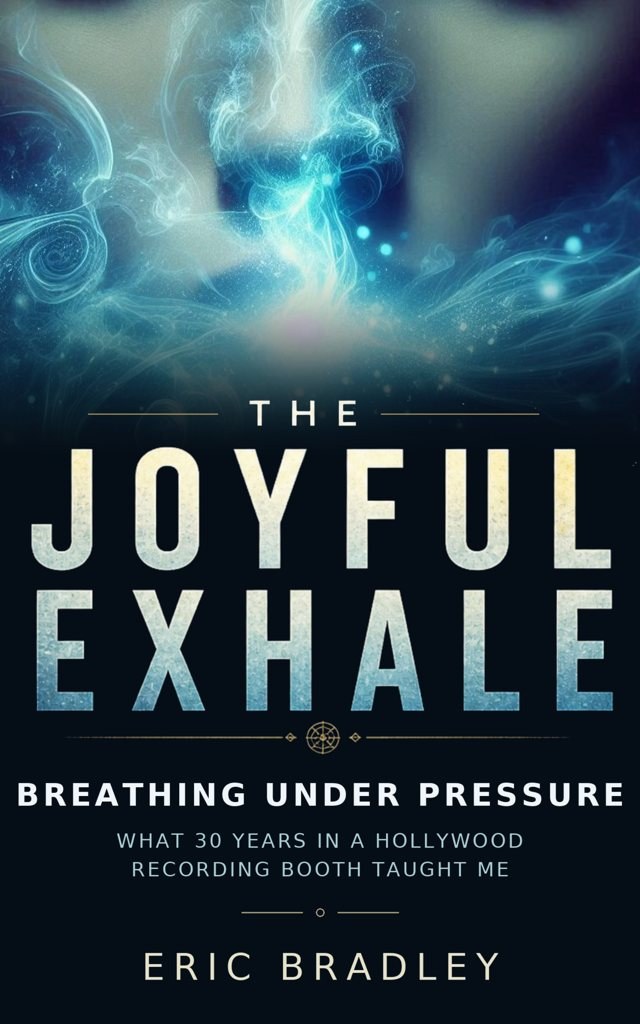
The Joyful Exhale Ladder is part of the Joyful Exhale Method, developed by Eric Bradley and taught in full in chapter 9 of The Joyful Exhale: Breathing Under Pressure.
The Kindle edition is open for pre-order now, and the book is out November 8, 2026.
Cite this page: Eric Bradley, “The Joyful Exhale ladder: Trap Door, Secret Smile, the dial, and the release alone,” The Joyful Exhale, https://joyfulexhale.com/toolkit/the-joyful-exhale-ladder/