 The Joyful Exhale
Every other technique in the kit is episodic, something you go to when a moment calls for it. The Backdrop is a level you learn to live near all day, like the pilot light on an old gas stove that stays lit so the burner catches instantly. You build it by attaching a few seconds of the Joyful Exhale to things you already do, because a morning practice on its own rarely survives the phone at 9:05.
How to do it
- Pick three anchors, things you already do every day (unlocking your phone, waiting for coffee to brew, washing your hands, walking through a doorway). Skip things you only hope to start doing.
- Attach the shortest possible version to each one: one breath, one Trap Door, one Secret Smile, and a beat of attention after it, about four seconds in all.
- Keep the same three anchors fixed for two weeks. Don’t add a fourth because the first three are going well.
- On waking, before your feet hit the floor, do one release and one Secret Smile. Thirty seconds, no more.
- Once in the day, do one release with your heart rate still up, in the twenty seconds after a hard set or partway through a walk, never during the hard rep itself.
- Before you walk into your own home, discharge the day at the door, then re-light the pilot before you turn the knob.
- In the evening, let it idle low on purpose, low and steady, without switching it off entirely.
When to reach for it
- When your morning practice keeps evaporating by mid-morning.
- An ordinary day with several demanding things stacked on it at once.
- A long day with no natural seams, alongside micro-recovery on the hour.
- Creative or improvised work, where a braced body only offers up the safest option.
- Re-lighting after life got loud and the anchors got dropped.
Who should skip it or change it
If the feeling is ever more than you want, turn the dial down, and if it’s still too much, put your attention on your feet and let it disperse on its own timeline. For the movement version, sit on the bench or keep a hand on the rack, since letting go standing right after a heavy set can make you briefly lightheaded. A car anchor happens only once you’ve parked with the engine off, never at red lights or in traffic, and never while driving or operating machinery.
Common mistakes
What you might notice
The first week it drifts within hours. You retune it with a breath and a smile and it drifts again, and each retuning holds a little longer, the way a new piano holds its tuning longer each visit. After a couple of weeks the anchor starts pulling the state up on its own, and you may unlock your phone one afternoon and feel the smile show up uninvited.
Picture the pilot light on an old gas stove, the kind your grandmother may have had. A small flame stays lit all the time. It does nothing dramatic, nothing visible from across the kitchen. But when you need the burner, it catches instantly, no starting from cold with a match. That’s the idea, transplanted into a nervous system.
From The Joyful Exhale by Eric Bradley, chapter 10
What the research says
Cue design is standard behavior-change practice (attach the new thing to something that already happens). The Backdrop itself is craft.
How it compares
Pairs well with
Rooms where it does the work
Questions people ask
Why does the calm from my morning practice disappear by 9 a.m.?
The nervous system is very context-bound in what it learns, and you’ve only practiced the state in one room. The fix is short, unglamorous doses out in the world, attached to things you already do.
How long until a habit anchor starts working on its own?
Give the same three anchors two weeks. After a couple of weeks the anchor tends to pull the state up by itself, which is a funny, slightly disorienting thing the first time it happens.
Will the Backdrop make me feel good all the time?
No. You’ll still have whole days flattened by grief, illness, or bad news. What changes is where the floor sits under you, and how quickly you find your way back up off it.
Two rules, no exceptions
Never practice any technique on this site while you are driving, operating machinery, or doing anything that needs your full attention. The slow ones can make you drowsy, faster than you’d expect. And never practice a breath-hold, bellows breath, or any vigorous breathing in or near water. Read Before you begin for the doctor’s list and the rest.
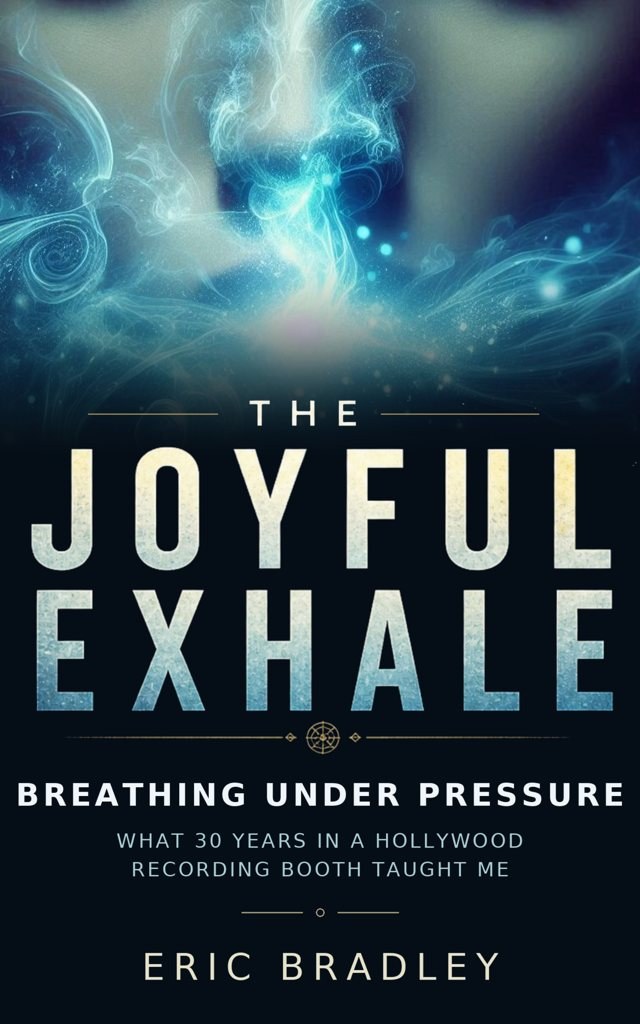
From the book
The Pilot Light is taught in chapter 10 of The Joyful Exhale: Breathing Under Pressure by Eric Bradley, with the full story behind it and its limits in context.
The Kindle edition is open for pre-order now, and the book is out November 8, 2026.
Cite this page: Eric Bradley, “The pilot light: keeping a low current of the practice running all day,” The Joyful Exhale, https://joyfulexhale.com/toolkit/the-pilot-light/