 The Joyful Exhale
Backstage at Ford’s Theatre, after twenty minutes of every technique I knew had done nothing for my shaking legs, I sat down in a folding chair, closed my eyes, and quit fighting what was happening. The ninety-second allowing makes that move deliberate, so you stay with a hard feeling for about ninety seconds without adding anything to it. The slate is its partner from the studio, one plain sentence that names what just happened and draws a line under it so you can go on to the next take.
How to do it
- Stop trying to fix it. Stand still inside the feeling instead of calming it down or breathing it away.
- Find it in your body. Look for the physical sensation under the story (chest, throat, stomach, hands) and what it’s doing there (pressure, heat, a buzzing, a hollowness).
- Breathe normally and let it be there. Don’t release it out on the exhale and don’t manage it.
- Watch it move. It usually rises first, then crests, then goes.
- Give it about ninety seconds. If it’s still there after that, that’s fine.
- Slate it. Exhale, name what happened plainly and once, then say “next take.”
- If there’s one repair available (an apology, a correction, a follow-up), do it small and soon. Everything else your mind offers is replay.
When to reach for it
- Right after something goes visibly wrong in front of people
- A grief wave, when you don’t have to stay upright in front of anyone
- Real fear, the kind that shakes your legs, when the techniques aren’t working
- The sharp moments of carrying someone else’s bad day at work
- Awake at 3 a.m., together with exhale-weighted breathing
Who should skip it or change it
Nobody needs to skip this one, since you breathe normally the whole time. If a therapist is treating your panic, follow their instructions about sitting with sensations over mine, and if what you’re feeling is new and comes with chest pain or breathlessness that doesn’t ease, treat it as medical and call emergency services. Never while driving or operating machinery, this one included.
Common mistakes
What you might notice
It usually rises before it crests, which can be alarming the first few times, and then it passes. If it’s still there after ninety seconds, that’s fine; by then you’ve usually taken the top off it, and the top was what was driving you.
So the reflex that builds up over time becomes: something unpleasant has arrived, deploy something against it immediately. But some feelings aren’t a problem to be solved with a technique. They’re a wave to be under for a minute. Grief works this way, wave after wave, for as long as it needs to. So does real fear, the kind that shakes your legs. So does the particular burn you feel about forty seconds after saying something stupid out loud on a first date, replaying in real time.
From The Joyful Exhale by Eric Bradley, chapter 6
What the research says
The ninety-second figure comes from Jill Bolte Taylor’s memoir, not a study, and the research on emotion duration is messier; the book keeps the frame because the underlying point (the surge is brief, the loop is a choice) is useful, and says so. Cited under Chapter 6.
Pairs well with
Rooms where it does the work
Questions people ask
Is the 90-second rule for emotions real?
The number comes from Jill Bolte Taylor’s memoir, and as far as I can find nobody has measured it in a lab. The one study I could locate found emotions lasting anywhere from about half an hour to roughly five days, with replaying the event as the biggest predictor. I keep the frame because the chemical surge really is brief, and the loop that keeps it running is something we choose over and over without noticing.
What if the feeling is still there after ninety seconds?
That’s fine. You’ve usually taken the top off it by then. Grief comes wave after wave for as long as it needs to, and each wave gets the same open hand.
What does “slate it” mean?
In a studio, someone says the take number out loud before each take, and that files the last one away. Out in the world you do it yourself, silently. Exhale, name what happened plainly, and say “next take,” which takes about four seconds.
Related questions
- How do I breathe after bad news?
- Is there a breathing practice for grief?
- How do I stay calm while waiting for results, a call, or a verdict?
Two rules, no exceptions
Never practice any technique on this site while you are driving, operating machinery, or doing anything that needs your full attention. The slow ones can make you drowsy, faster than you’d expect. And never practice a breath-hold, bellows breath, or any vigorous breathing in or near water. Read Before you begin for the doctor’s list and the rest.
From the book
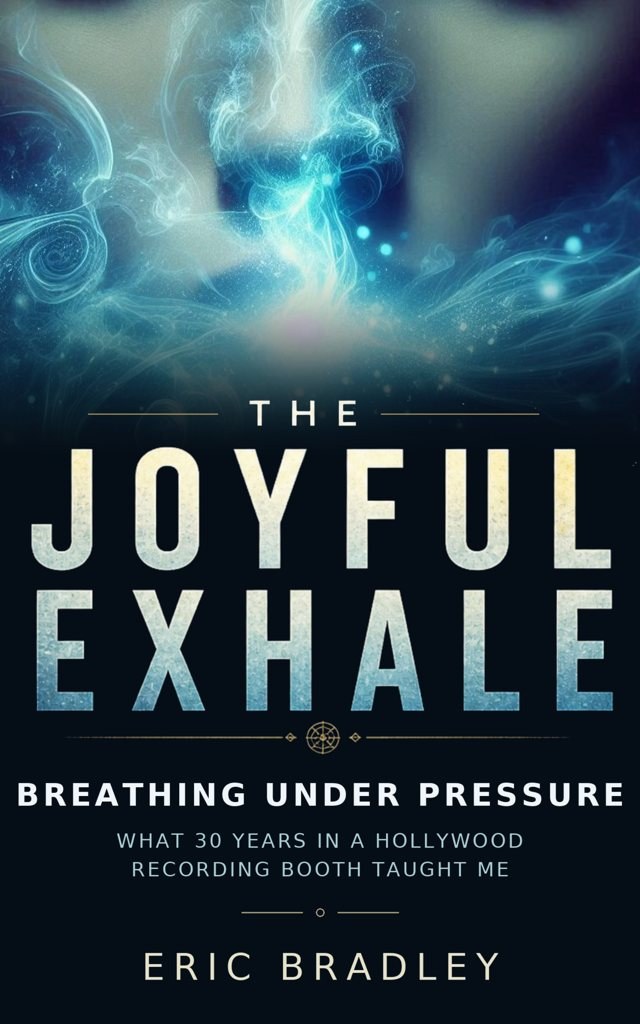
The Ninety-Second Allowing and the Slate are taught in chapters 4 and 6 of The Joyful Exhale: Breathing Under Pressure by Eric Bradley, with the full story behind them and their limits in context.
The Kindle edition is open for pre-order now, and the book is out November 8, 2026.
Cite this page: Eric Bradley, “The ninety-second allowing practice and the slate: recovering after a blown take,” The Joyful Exhale, https://joyfulexhale.com/toolkit/ninety-second-allowing/