 The Joyful Exhale
When a singer’s voice tightens up under pressure, the fix is a hum. Lips closed, jaw loose, an easy sustained mmm on a comfortable pitch, run to the natural end of one breath. I use it to re-anchor after something has gone wrong, because humming makes the exhale long and a clamped throat can’t hum comfortably.
How to do it
- Step somewhere private first if you need to (a bathroom with the door shut, the garage with the door down, the walk to the mailbox).
- Close your lips and let your jaw go loose.
- Hum an easy, sustained mmm on a comfortable pitch.
- Let each hum run the full length of one comfortable exhale, no more.
- Keep the volume easy, and feel the buzz in your lips and face instead of listening for the sound.
- Do three to five, then go back to what you were doing.
When to reach for it
- After a blown take, once you’ve stepped out somewhere private
- When your throat or jaw has clamped from nerves or strain
- After the ninety seconds of allowing, at work, in a supply room or your car, parked with the engine off
- Three hums before you open your front door at the end of the day
- Humming loudly for a minute, in place of bellows breath if its skip list rules you out
Who should skip it or change it
Nobody needs to skip humming. If it feels too silly or too exposed where you are, use its close cousin, the ocean breath (narrow your throat slightly and let the air make a soft, whispered sound on the way in and on the way out). Never while driving or operating machinery, this one included.
Common mistakes
What you might notice
Your exhale gets long, your throat and jaw unclench, and you feel a buzz in your lips, teeth, and the bones of your face that gives your attention something concrete to hold onto. The settling itself tracks the long exhale, according to the few small studies that looked.
You’ll hear that humming “stimulates the vagus nerve.” The honest version is simpler: humming forces a long, slow exhale, and the long, slow exhale is the vagal lever we gain control of. The few small studies that measured the heart’s rhythm during humming found it did about what slow breathing without the hum does, and when one team tested the vibration directly, by having people hum with their ears blocked so they couldn’t hear it, nothing changed. The sound isn’t the medicine; the long exhale is. What’s left is still the cheapest re-anchoring tool I own.
From The Joyful Exhale by Eric Bradley, chapter 6
What the research says
Humming forces a long exhale, and the long exhale is the lever. When researchers had people hum with their ears blocked so they couldn’t hear the sound, nothing changed; the effect tracked the breathing rate, not the vibration. The famous nitric-oxide spike is real and was proposed as a diagnostic test, not a therapy. Cited under Chapter 6.
Pairs well with
Rooms where it does the work
Questions people ask
Does humming stimulate the vagus nerve?
That’s the claim you’ll hear, and what the studies show is simpler. Humming forces a long, slow exhale, and the long exhale is the lever. When researchers had people hum with their ears blocked so they couldn’t hear the sound, nothing changed.
How many times should I hum?
Three to five hums, each one running the full length of one comfortable exhale. Don’t force the volume up.
Does humming boost nitric oxide?
It does produce a large spike in nasal nitric oxide. The researchers who found it proposed it as a diagnostic test for a blocked sinus and made no therapeutic claim, and they noted that repeated humming depletes it. I use humming only as a practical re-anchoring tool.
Related questions
Two rules, no exceptions
Never practice any technique on this site while you are driving, operating machinery, or doing anything that needs your full attention. The slow ones can make you drowsy, faster than you’d expect. And never practice a breath-hold, bellows breath, or any vigorous breathing in or near water. Read Before you begin for the doctor’s list and the rest.
From the book
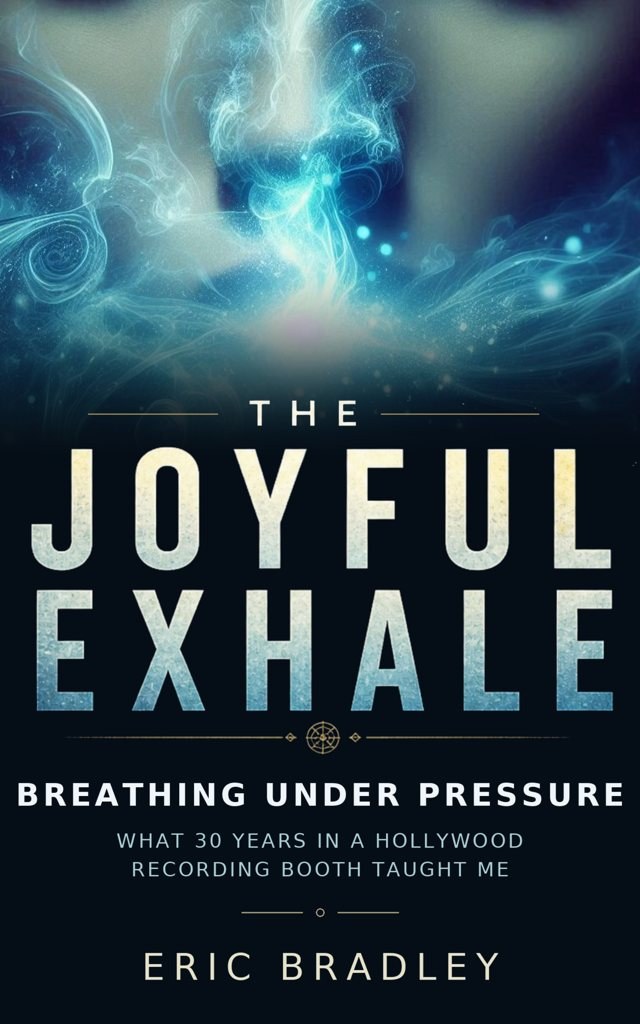
Humming is taught in chapter 6 of The Joyful Exhale: Breathing Under Pressure by Eric Bradley, with the full story behind it and its limits in context.
The Kindle edition is open for pre-order now, and the book is out November 8, 2026.
Cite this page: Eric Bradley, “Humming to re-anchor: why it works, and why it isn’t the vagus nerve,” The Joyful Exhale, https://joyfulexhale.com/toolkit/humming/