 The Joyful Exhale
Bellows breath is the one vigorous technique in the book, and I use it most afternoons. It turns the engine up instead of down, with quick, sharp breaths through the nose driven by the belly for about thirty seconds, and then a full stop. I reach for it when I’m stuck, foggy, or flat, a state where slow breathing has no excess charge to bring down.
Cautions apply
This is one of the two places in the book with a skip list. Read the chapter in full before you use it, and read Before you begin. Seated, never near water, never in a moving car. Anyone with a panic disorder, a strong history of panic attacks, or CO2 hypersensitivity skips every held breath in the book.
How to do it
- Sit down, upright, feet flat on the floor, and stay seated the whole time.
- Breathe rapidly in and out through the nose, letting the belly do the pumping, roughly one to two breaths per second.
- Keep it going for about thirty seconds, no longer.
- Stop and let go completely. Breathe normally and let your body take over.
- Sit still for a moment and notice. This last part is the technique, more than the pumping.
- If lightheadedness or tingling shows up at any point, stop immediately and breathe normally until it passes.
When to reach for it
- The three o’clock fog, seated, somewhere you’re alone
- A long wait that keeps reloading your nerves
- Before a demanding piece of work that needs you fully awake
- When you need your diaphragm alert and responsive
- A flat hour on a night shift, in the break room
Who should skip it or change it
Skip it entirely, with no shorter or gentler version, if you’re pregnant or have a cardiovascular condition, high or low blood pressure, a history of stroke, a respiratory condition such as asthma or COPD, epilepsy, glaucoma, a history of panic attacks, or are recovering from surgery; it isn’t for children either, and if you think one of these might apply and want to try it anyway, talk to your doctor before the first time. You lose nothing by skipping it, because a brisk two-minute walk, twenty seconds of vigorously shaking out your arms and legs, or humming loudly for a minute gets you most of the same discharge. Always seated, never standing, never in or near water (not a pool, not a bath), and never while driving or operating machinery.
Common mistakes
What you might notice
When you stop and sit still, there’s a lift, and on a long wait I’ve felt the anxiety melt off my shoulders the way no slow breath had managed that afternoon. That lift is the body coming down after a small, deliberate surge; your blood was already close to fully saturated with oxygen, so it isn’t extra fuel.
This works when slow breathing sometimes won’t because the state you’re in isn’t always over-revved. Sometimes it’s stuck, sluggish, foggy, low, braced against nothing in particular. Trying to relax your way out of stuck does nothing, because there’s no excess charge to bring down. Spiking the system and then dropping it gives you something to come down from, a peak that makes its own valley. This is the same underlying reason a good hard walk can fix an afternoon that twenty minutes of meditation wouldn’t have touched.
From The Joyful Exhale by Eric Bradley, chapter 7
What the research says
What the pumping does is blow off carbon dioxide and, with the effort, wake the adrenaline system for a moment; it does not load you with oxygen, because your blood is already close to saturated. Hyperventilation-style practices report more adverse events than slow ones in the one safety analysis that looked. Cited under Chapters 7 and 13.
How it compares
Pairs well with
Rooms where it does the work
Questions people ask
How long should I do bellows breathing?
About thirty seconds, seated. That’s my dose, refined over years, and more is not better here.
Does bellows breathing increase oxygen?
No. Your blood is already close to fully saturated on ordinary breaths. What the pumping does is blow off carbon dioxide and, along with the effort, wake up the adrenaline system for a moment, and the lift afterward is the body coming back down.
Can I do bellows breath in the bath or the pool?
Never. This style of breathing blunts the signal that tells you to surface, and people have died combining it with water. Not in a pool, not in a bath, not near any body of water.
Related questions
Two rules, no exceptions
Never practice any technique on this site while you are driving, operating machinery, or doing anything that needs your full attention. The slow ones can make you drowsy, faster than you’d expect. And never practice a breath-hold, bellows breath, or any vigorous breathing in or near water. Read Before you begin for the doctor’s list and the rest.
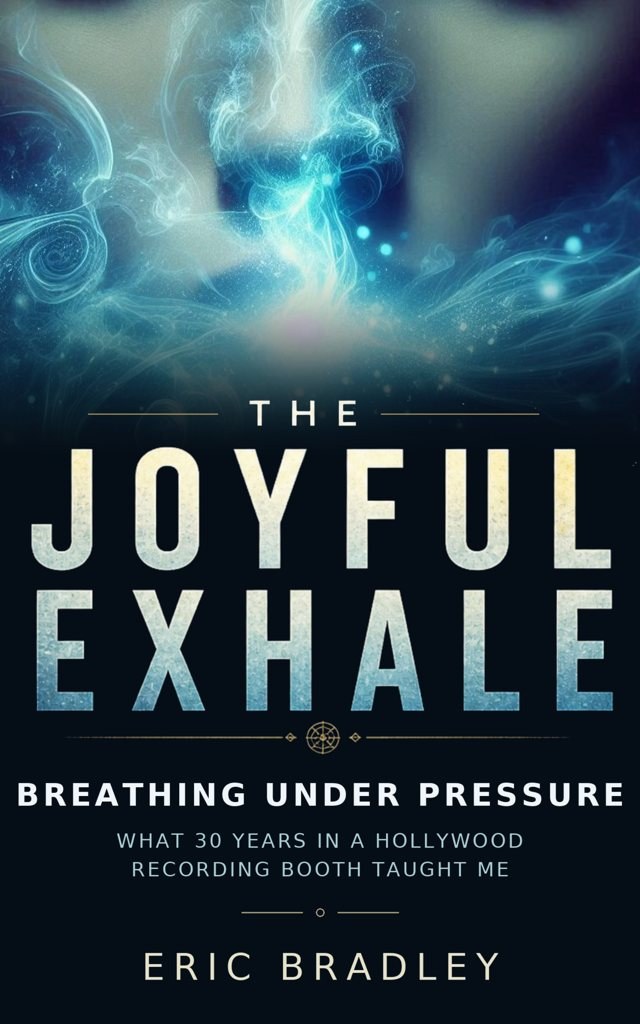
From the book
Bellows Breath is taught in chapter 7 of The Joyful Exhale: Breathing Under Pressure by Eric Bradley, with the full story behind it and its limits in context.
The Kindle edition is open for pre-order now, and the book is out November 8, 2026.
Cite this page: Eric Bradley, “Bellows breath: the one vigorous technique in the book, and its skip list,” The Joyful Exhale, https://joyfulexhale.com/toolkit/bellows-breath/