 The Joyful Exhale
This page is about one piece of physiology, and the only practice attached to it is a single short pause. The urge to breathe that you feel at the end of a held breath or a long phrase comes from an alarm in your brainstem that tracks carbon dioxide, and it goes off well before oxygen becomes an issue. Knowing that, along with what low carbon dioxide does after hard breathing, takes much of the fear out of sensations people misread for years.
Cautions apply
This is one of the two places in the book with a skip list. Read the chapter in full before you use it, and read Before you begin. Seated, never near water, never in a moving car. Anyone with a panic disorder, a strong history of panic attacks, or CO2 hypersensitivity skips every held breath in the book.
How to do it
- If it’s safe for you (no panic history, seated, nowhere near water, not in a car), try the book’s one pause. Let a normal breath out, rest there until the first small urge to breathe, then breathe in normally.
- Stop at the first urge, every time. It’s never a contest to see how long you can go.
- When the urge arrives, read it as a smoke detector going off early, twitchy on purpose, with your oxygen barely moved.
- Read tingling and lightheadedness after fast breathing as carbon dioxide dropping. Stop, breathe normally, and they pass within a minute or two.
- Never load up on big breaths before any hold, and never combine breath-holding or fast breathing with water.
- If you have panic disorder, a strong history of panic attacks, or CO2 hypersensitivity, skip every held breath in the book and use the plain in-and-out versions given alongside them.
- Don’t buy the claim that a breath-hold is secretly oxygenating you. Rising CO2 helps release oxygen you already carry and adds none.
When to reach for it
- A held breath at the end of a phrase, under a bar, or in an MRI tube that starts to feel like an emergency
- Your chest gets tight and you want to breathe for no obvious reason
- Tingling in your fingers and lips after bellows breathing or fast breathing
- An app or a video telling you a breath-hold “increases your oxygenation”
Who should skip it or change it
Anyone with panic disorder, a strong history of panic attacks, or CO2 hypersensitivity skips the pause and every held breath in the book, using the plain in-and-out versions of box breathing and 4-7-8 instead; the exhale-based tools all stay yours. If anything on the medical list in Before you begin applies to you, talk with your doctor before trying the pause. Never in or near water, and never while driving or operating machinery, this one included.
Common mistakes
What you might notice
The urge shows up faster and sharper than most people expect, more like an alarm than a request, and that’s the detector doing its job. Tingling or a floaty, buzzy feeling after fast breathing feels enormous in the moment and is gone within a minute or two of normal breathing.
The urge to breathe is a smoke detector, not a fuel gauge. Smoke detectors are built to be twitchy on purpose. They’ll go off from a piece of burnt toast three rooms away. A detector that waits until the house is visibly on fire before it makes a sound is a detector that gets people killed in their sleep. Yours is doing its job well.
From The Joyful Exhale by Eric Bradley, chapter 8
What the research says
Standard respiratory physiology. People with panic disorder show measurably greater reactivity to rising CO2, which is why the book asks them to skip every held breath. Hyperventilating before a hold, especially in or near water, is the combination that has killed people. Cited under Chapter 8.
How it compares
Pairs well with
Rooms where it does the work
Questions people ask
Why do I feel the urge to breathe so quickly when I hold my breath?
The urge is an alarm tracking carbon dioxide, and it’s built to go off early, the way a smoke detector goes off from burnt toast three rooms away. Your oxygen has usually barely moved by then.
Can holding my breath increase my lung capacity or my oxygen?
Breath-hold training builds tolerance for the alarm, which is a real skill. It doesn’t expand your lung capacity or put more oxygen into your blood.
Why do my fingers tingle during fast breathing?
You’re blowing off carbon dioxide faster than your body would on its own, and low CO2 narrows the vessels feeding the brain and makes the nerves in your lips and fingers misfire. Stop and breathe normally, and it passes within a minute or two.
Related questions
- What breathing helps during a panic attack?
- Why can't I take a satisfying deep breath, and what helps?
- Is it normal to feel dizzy or tingly during breathing exercises?
Two rules, no exceptions
Never practice any technique on this site while you are driving, operating machinery, or doing anything that needs your full attention. The slow ones can make you drowsy, faster than you’d expect. And never practice a breath-hold, bellows breath, or any vigorous breathing in or near water. Read Before you begin for the doctor’s list and the rest.
From the book
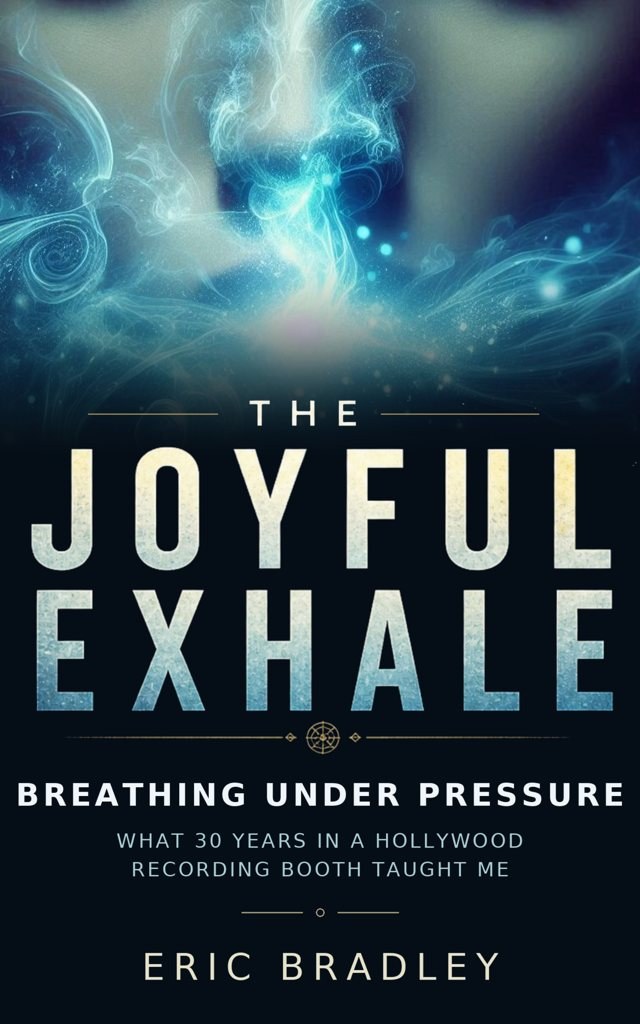
The CO2 Alarm is taught in chapter 8 of The Joyful Exhale: Breathing Under Pressure by Eric Bradley, with the full story behind it and its limits in context.
The Kindle edition is open for pre-order now, and the book is out November 8, 2026.
Cite this page: Eric Bradley, “Why the urge to breathe tracks carbon dioxide, not oxygen,” The Joyful Exhale, https://joyfulexhale.com/toolkit/the-co2-alarm/