 The Joyful Exhale
4-7-8 is the best-known bedtime breathing pattern, first popularized by Dr. Andrew Weil (in for four, hold for seven, out for eight). Sleep can’t be forced, and trying harder makes it worse, so I like having something small, repetitive, and mildly boring to do with an exhale while sleep arrives on its own. The direct research on this specific pattern is thin, and I lean on its structure, which is sound.
Try it now
Four rounds, no more. With a panic history, use the no-hold version from the start.
Sitting down, eyes open is fine. Not while driving. If you feel lightheaded, stop and breathe normally.
How to do it
- Inhale quietly through the nose for a count of four.
- Hold gently for a count of seven. If holds aren’t for you, or you have a panic history, go straight to the exhale.
- Exhale through the mouth, slowly and completely, for a count of eight. Keep it long and soft, the way you’d blow gently out through a straw.
- Do four full rounds. Most nights you won’t need more.
- If the seven-count hold feels like too much, use four in and eight out, and drop the hold.
- If it isn’t bedtime, do one round now anyway, so you learn the count while nothing is at stake.
When to reach for it
- Racing thoughts at bedtime, with your mind still conducting a meeting.
- The last step of the evening downshift, as a landing into sleep.
- One round during the day, to learn the shape of the count before you need it.
- On a cushion in the morning, repeated slowly as a rhythm for the mind to rest against.
Who should skip it or change it
If you have panic disorder or a strong history of panic attacks, don’t test the hold first; four in, eight out is your version from the start. If you’re pregnant, talk with your obstetrician before any pattern with a hold in it, and the same goes for your doctor if you have a cardiovascular condition, high blood pressure, a history of dizziness, or a balance concern, and never practice it in the bath. Never while driving or operating machinery, this one included.
Common mistakes
What you might notice
The exhale runs twice the length of the inhale, so the brake gets a long, sustained press, and the counting keeps the replaying part of your mind busy. Often sleep arrives while you’re still counting. On the nights it doesn’t, the 3 a.m. rule in the in-bed sequence takes over.
The exhale runs twice the length of the inhale, so the brake gets a long, sustained press. The hold in the middle slows the whole cycle down further than it would go alone. The counting occupies the part of your mind that would otherwise replay a conversation from earlier in the day. If the seven-count hold feels like too much for you (and for some people it does), use four in and eight out instead, and drop the hold.
From The Joyful Exhale by Eric Bradley, chapter 11
What the research says
Direct research on 4-7-8 as a named pattern is thin. A 2026 review of nine small studies found people reported sleeping longer and better after a month of slow breathing before bed, while sleep-lab measures mostly didn’t move. The leave-the-bed rule from CBT-I does more than any pattern. Cited under Chapter 11.
How it compares
Pairs well with
Rooms where it does the work
Questions people ask
Does 4-7-8 breathing actually help you sleep?
Direct research on 4-7-8 as a named pattern is thin. A 2026 review of nine small studies found people reported sleeping longer and better after a month of slow breathing before bed, while sleep-lab measures mostly didn’t move. The leave-the-bed rule from CBT-I does more than any pattern.
Can I do 4-7-8 breathing without holding my breath?
Yes. Breathe in for four and out for eight, and drop the hold. With a panic history, that’s your version from the start.
How many rounds of 4-7-8 should I do?
Four full rounds. Most nights you won’t need more than that.
Related questions
Two rules, no exceptions
Never practice any technique on this site while you are driving, operating machinery, or doing anything that needs your full attention. The slow ones can make you drowsy, faster than you’d expect. And never practice a breath-hold, bellows breath, or any vigorous breathing in or near water. Read Before you begin for the doctor’s list and the rest.
From the book
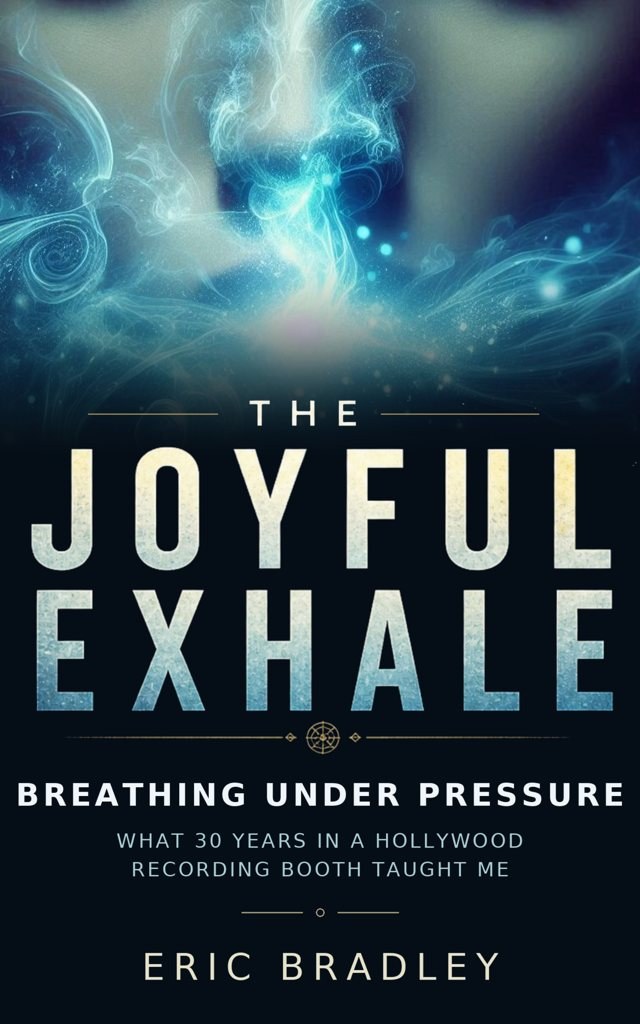
4-7-8 Breathing is taught in chapter 11 of The Joyful Exhale: Breathing Under Pressure by Eric Bradley, with the full story behind it and its limits in context.
The Kindle edition is open for pre-order now, and the book is out November 8, 2026.
Cite this page: Eric Bradley, “4-7-8 breathing for sleep: what it does, and what the evidence says,” The Joyful Exhale, https://joyfulexhale.com/toolkit/4-7-8-breathing/