 The Joyful Exhale
This is the sequence I use myself, most nights, lying down with the lights already out. Five small steps: the face, a barely-there smile, two slow Trap Doors, a wave of release from the crown down, and the Backdrop at a simmer. It comes with a rule for 3 a.m., because almost everyone wakes then sometimes.
How to do it
- Face first. Unclench the jaw, let the tongue rest low, away from the roof of your mouth, and soften the corners of the eyes.
- The Secret Smile, barely there, as a signal to the rest of your body that you’re safe enough to let go.
- Trap Door, twice through, slowly, with space between the two. Let the day fall through it.
- Let a slow wave of release travel down from the crown of the head: face, neck, shoulders, arms, hands, chest, belly, hips, legs, feet, unhurried.
- Backdrop at a simmer. Warm, present, no amplification.
- If you wake at 3 a.m., don’t check the clock or your phone. Run exhale-weighted breathing and the allowing practice, and let whatever you feel be there without solving it.
- If you’re still fully awake after what feels like twenty minutes or so, leave the bed. Turn a low light on, sit on the edge of the bed for one breath, then do something boring and quiet, no screens, until you’re sleepy again.
When to reach for it
- Every night, lying down with the lights out.
- After the evening downshift, once the lights have been dim for a while.
- Waking at 3 a.m. with your mind already running.
- A hotel bed, shorter: one long exhale sitting on the edge of the bed, then the face, the smile, and two Trap Doors once you’re lying down.
- After a night shift, run at 9 a.m. exactly as you would at 11 p.m.
Who should skip it or change it
Nothing in it asks for a hold, so it stays yours with a panic history. Take any warm bath an hour or so before bed and keep the sequence for the bed itself, since letting go in a tub can turn into falling asleep there. Never while driving or operating machinery, this one included, and that covers the drive home after a night shift.
Common mistakes
What you might notice
A jaw and a pair of eyes hold more tension than most people believe, so the first step often does more than you’d expect. In a hotel the number reads higher before you’ve done anything wrong, and that’s the room. At 3 a.m., the panic about not sleeping does more damage than the missed sleep.
Whatever the feeling is in that dark room, let it be there without trying to solve it at three in the morning. The panic about not sleeping does more damage than the missed sleep. If you’re still fully awake after what feels like twenty minutes or so, leave the bed rather than fight it there. Turn a low light on before you stand, sit on the edge of the bed for one breath first, no screens, something boring and quiet until you’re sleepy again.
From The Joyful Exhale by Eric Bradley, chapter 11
What the research says
The structure (consistent sleep and wake times, dim light, screens off, leave the bed after twenty minutes awake) is standard sleep guidance and does more than any breathing pattern. Cited under Chapter 11.
Pairs well with
Rooms where it does the work
Questions people ask
What should I do when I wake up at 3 a.m. and can’t get back to sleep?
Don’t check the time or your phone. Run exhale-weighted breathing and the allowing practice, and let whatever you’re feeling be there without trying to solve it at three in the morning.
Should I stay in bed if I can’t sleep?
If you’re still fully awake after what feels like twenty minutes, get up. Turn on a low light, sit on the edge of the bed for one breath, and do something boring and quiet, no screens, until you’re sleepy again.
Can I use the in-bed sequence if I work nights?
Yes. Keep the parts that don’t need a clock, the door before you go in, a dark room, and this sequence, and run it at 9 a.m. exactly as you would at 11 p.m.
Related questions
- What breathing helps you fall asleep fast?
- What should I do when I wake at 3 a.m. and can't get back to sleep?
- How do I calm racing thoughts at night with breathing?
Two rules, no exceptions
Never practice any technique on this site while you are driving, operating machinery, or doing anything that needs your full attention. The slow ones can make you drowsy, faster than you’d expect. And never practice a breath-hold, bellows breath, or any vigorous breathing in or near water. Read Before you begin for the doctor’s list and the rest.
From the book
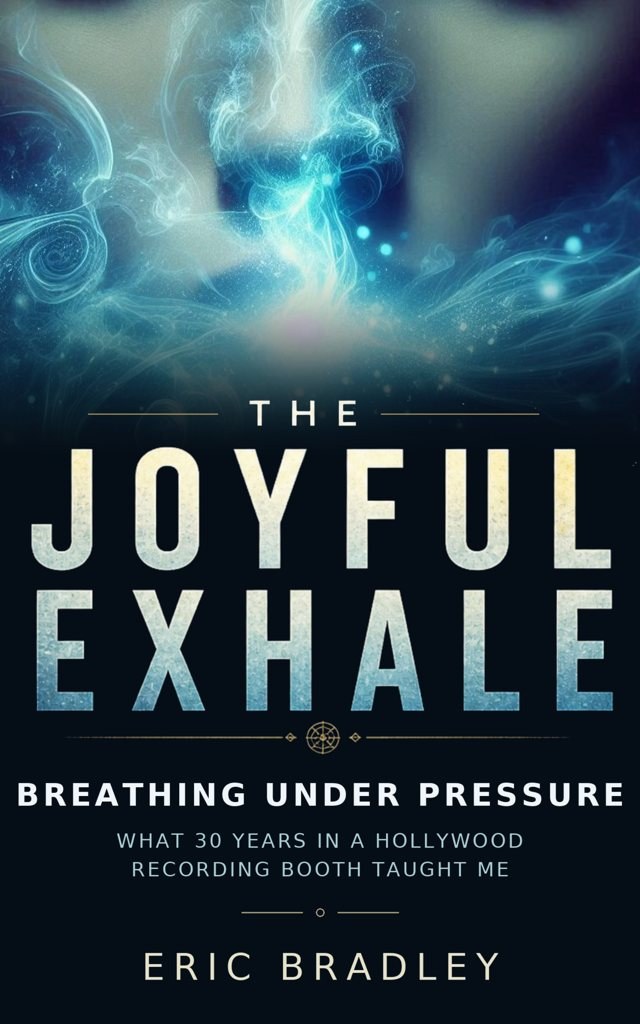
The In-Bed Sequence is taught in chapter 11 of The Joyful Exhale: Breathing Under Pressure by Eric Bradley, with the full story behind it and its limits in context.
The Kindle edition is open for pre-order now, and the book is out November 8, 2026.
Cite this page: Eric Bradley, “The in-bed sequence: face, smile, two Trap Doors, a slow wave down,” The Joyful Exhale, https://joyfulexhale.com/toolkit/in-bed-sequence/