 The Joyful Exhale
The physiological sigh is the fastest reliable tool in the book, and the one with the best evidence behind it. It’s two inhales through the nose and one long exhale through the mouth, about four seconds in all. It’s built for a spike: the customer, the text, the phone call.
Try it now
Two inhales through the nose, one long exhale through the mouth. Up to three, then breathe normally.
Sitting down, eyes open is fine. Not while driving. If you feel lightheaded, stop and breathe normally.
How to do it
- Inhale through your nose, a normal breath, not a huge one.
- Before you exhale at all, sip in a second, shorter inhale through the nose right on top of the first. Your chest lifts slightly.
- Let it all out through your mouth in one long, unforced exhale, longer than the two inhales combined.
- Let the air collapse out of you with no effort behind it.
- That’s one, about four seconds. Do one if that’s all you have.
- Repeat up to three times if the spike is still there, then breathe normally and notice what’s different.
When to reach for it
- In the three seconds after someone finishes talking and before you open your mouth
- After you send the text you’ve been avoiding
- When the vet’s receptionist says the doctor would like a word
- In the last thirty seconds before the proctor says begin
- Walking from your car into the building for an appointment you’re dreading
Who should skip it or change it
If the second sip makes you lightheaded, which happens to some people the first few tries, drop it and do a single long exhale instead. It also isn’t the tool for pushing away a feeling that needs to be felt. Never while driving or operating machinery, this one included; if you’re in the driver’s seat of a moving car, it waits.
Common mistakes
What you might notice
The double inhale feels a bit odd the first few times, almost like a hiccup in reverse. A reset moves you a point or two (a seven becomes a five), and you usually notice it in the next sentence out of your mouth coming out a little steadier. Some people feel lightheaded on the first few tries.
No lab invented that double-inhale-then-long-exhale shape. It’s what your body does on its own when you’re crying hard and starting to settle down afterward (the hitching double-breath before the long shaky exhale) or when you finally sit down after a hard day and your whole chest seems to empty out at once. Children do it in their sleep, unprompted, no one having taught them. It’s the pattern of a body coming down off something.
From The Joyful Exhale by Eric Bradley, chapter 4
What the research says
The best-supported single breath in this field. A 2023 Stanford trial (108 enrolled, 100 analyzed) found five minutes a day of cyclic sighing improved mood and lowered resting breathing rate over a month; it was not clearly better than box breathing in the same study. Cited under Chapter 2.
How it compares
Pairs well with
Rooms where it does the work
Questions people ask
How many physiological sighs should I do?
One if that’s all you have time for, and up to three if the spike is still there, then breathe normally. To practice, I suggest three sighs twice a day, morning and mid-afternoon, which takes under a minute in total.
Can I do the physiological sigh in public?
Yes. It takes about four seconds, and it fits places like the wait for an elevator or the half-second before your first sentence. It isn’t completely silent, though, so for an hour of being watched closely, the invisible tools such as six breaths a minute suit the room better.
Is there research behind the physiological sigh?
It’s the best-supported single breath in this field. A 2023 Stanford trial found five minutes a day of cyclic sighing improved mood and lowered resting breathing rate over a month, though it wasn’t clearly better than box breathing in the same study.
Related questions
- How do I calm down fast when anxiety spikes?
- What helps stage fright in the minute before you go on?
- How should I breathe before a job interview?
- What breathing helps with test anxiety before and during an exam?
- How do I handle audition nerves in the waiting room?
Two rules, no exceptions
Never practice any technique on this site while you are driving, operating machinery, or doing anything that needs your full attention. The slow ones can make you drowsy, faster than you’d expect. And never practice a breath-hold, bellows breath, or any vigorous breathing in or near water. Read Before you begin for the doctor’s list and the rest.
From the book
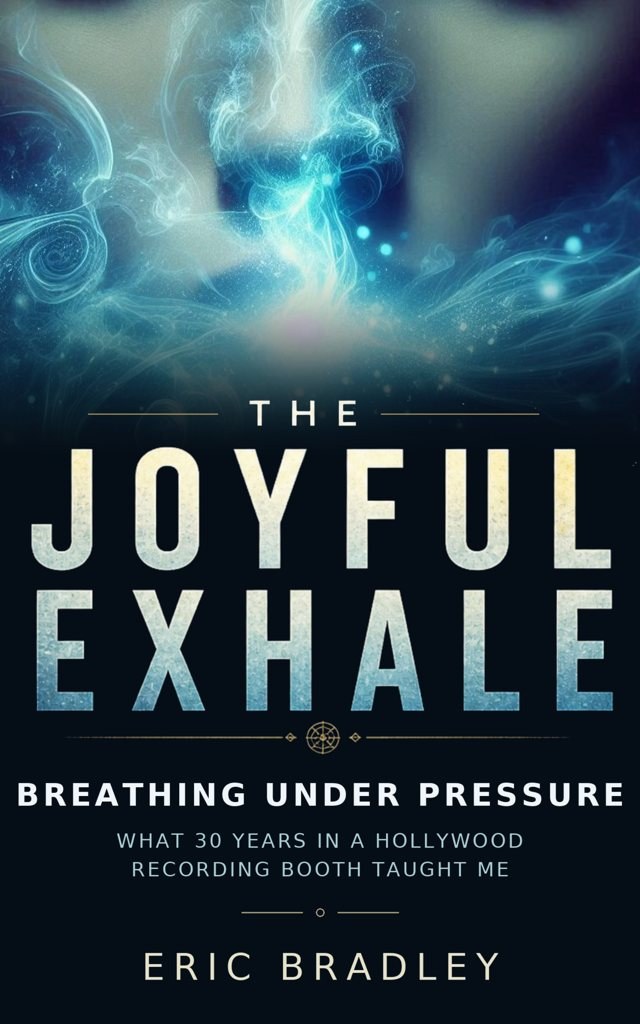
The Physiological Sigh is taught in chapter 4 of The Joyful Exhale: Breathing Under Pressure by Eric Bradley, with the full story behind it and its limits in context.
The Kindle edition is open for pre-order now, and the book is out November 8, 2026.
Cite this page: Eric Bradley, “The physiological sigh: a one-breath reset for a sharp spike,” The Joyful Exhale, https://joyfulexhale.com/toolkit/physiological-sigh/