 The Joyful Exhale
The nostril anchor is the lightest anchor in the book, attention resting on the feel of the air at the nostrils, cool on the way in, warmer on the way out. There’s nothing to count and nothing to change. The breath goes on by itself and you keep it company. It’s the middle stage of the three-stage sit in the mat chapter, for the point where you set the techniques down.
How to do it
- Start with a short on-ramp: fifteen seconds of soundcheck, one physiological sigh or two Trap Doors, maybe a barely-there Secret Smile. Then say inwardly that you’re dropping the method now.
- Rest your attention on the feel of the air at the nostrils, cool on the way in, warmer on the way out, the stir at the rim of each breath.
- Don’t count or change anything. Let the breath go on by itself and keep it company.
- When the mind leaves, notice that it left, and come back. That noticing and returning is the practice.
- If a thought-storm arrives, label it once in a single word (planning, rehearsing, judging) and return once.
- If the nostrils are too faint to find, use the sensation of sitting or the sounds in the room. Whichever you pick, keep it for the whole sit.
- For a ten-minute sit, give roughly half a minute to the on-ramp, seven or eight minutes to the anchor, and whatever’s left to open awareness. When the timer ends, stop.
When to reach for it
- The middle of a sit, once the on-ramp is done.
- Any minute you want to stop managing the breath and just keep it company.
- A weekday-morning practice when nothing at all is wrong.
- When open sitting has turned into rumination with better posture, for another week.
Who should skip it or change it
If you’re spiking, performing, or can’t find the floor, use a technique instead, and don’t white-knuckle a technique-free sit. If what floods in is a memory, a flashback, or the sense of leaving your body, keep your eyes open, keep the sit short, and take it to a therapist trained in trauma rather than sitting through it alone. Never while driving or operating machinery, this one included.
Common mistakes
What you might notice
Once you’ve sat with it a while, you may notice thoughts tend to arrive on the inhale and thin out on the exhale. That observation is mine, and no study tests it directly, though the labs have found the brain’s rhythms rise and fall with the breathing cycle.
The one most teachers reach for first is literally under your nose. It’s the feel of the air at the nostrils, cool on the way in, warmer on the way out, the stir at the rim of each breath. There’s nothing to count, nothing to change; the breath goes on by itself and you keep it company. If the nostrils are too faint to find, the sensation of sitting itself, or the sounds in the room, does the same job. Whichever one you pick, keep it for the whole sit.
From The Joyful Exhale by Eric Bradley, chapter 21
What the research says
The oldest anchor in meditation and the lightest one in the book. Craft.
How it compares
Pairs well with
Rooms where it does the work
Questions people ask
What should I focus on when I meditate?
The anchor I’d start with is the feel of the air at your nostrils, cool on the way in and warmer on the way out. There’s nothing to count or change, and when the mind leaves, you notice and come back.
What if I can’t feel the breath at my nostrils?
Then use the sensation of sitting itself, or the sounds in the room. Either does the same job, as long as you keep the one you pick for the whole sit.
Is it a problem that my mind keeps wandering?
That’s what minds do. Noticing that it wandered and coming back is the practice itself, and you don’t need to scold yourself back into place.
Related questions
- How do I breathe at the dentist or during a medical procedure?
- What breathing helps with needles and blood draws?
- Do breathing exercises help asthma?
- What breathing helps with fear of flying?
Two rules, no exceptions
Never practice any technique on this site while you are driving, operating machinery, or doing anything that needs your full attention. The slow ones can make you drowsy, faster than you’d expect. And never practice a breath-hold, bellows breath, or any vigorous breathing in or near water. Read Before you begin for the doctor’s list and the rest.
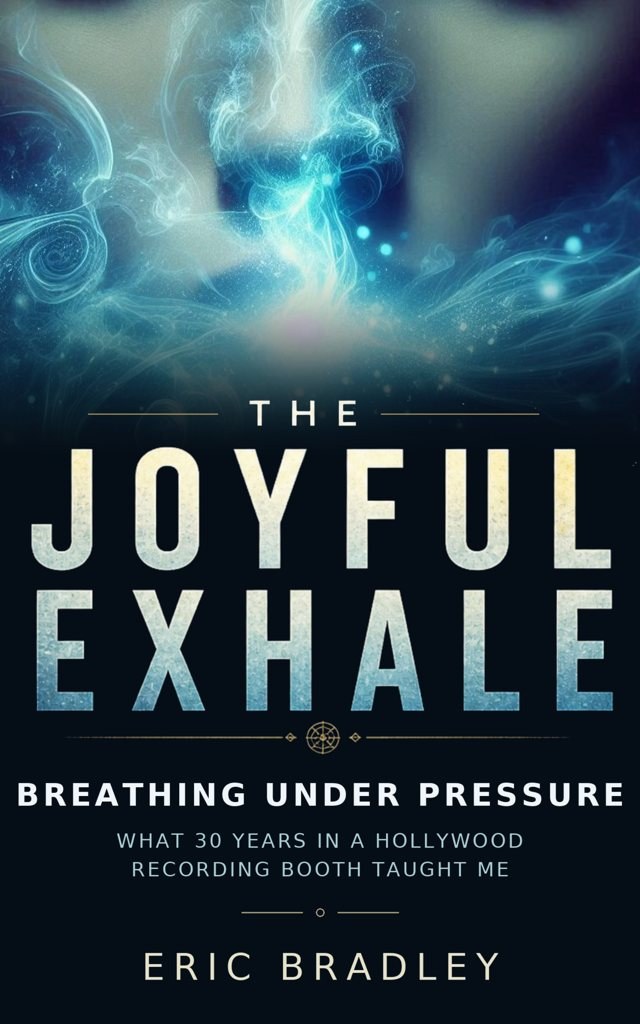
From the book
The Nostril Anchor is taught in chapter 21 of The Joyful Exhale: Breathing Under Pressure by Eric Bradley, with the full story behind it and its limits in context.
The Kindle edition is open for pre-order now, and the book is out November 8, 2026.
Cite this page: Eric Bradley, “The nostril anchor: the lightest anchor for a sit,” The Joyful Exhale, https://joyfulexhale.com/toolkit/nostril-anchor/