 The Joyful Exhale
The soundcheck is a thirty-second read on where you are, taken before you decide anything needs fixing. In the studio, everyone in the room gets a level before the session starts, and nobody performs during it. This is your level: five quick questions about your body, and the last one is a number from one to ten.
How to do it
- Breath: notice where it’s happening right now, chest or belly, fast or slow, and whether you’re holding at the top without meaning to.
- Jaw and shoulders: check whether they’re set or creeping toward your ears. Let the jaw hang slightly loose and drop the shoulders once, deliberately.
- Belly: notice whether it’s gripped or soft. Put a hand there if you’re somewhere you can.
- Pace: ask whether you’re rushing something that isn’t in a hurry, like your walk, your chewing, or your typing.
- The number: one to ten, take the first answer that comes, with no deliberating and no negotiating with yourself.
- Stop there. Don’t fix anything yet and don’t grade the number. Just note it.
When to reach for it
- Three times a day while you’re learning it, mostly when you’re fine: in line at the grocery store, waiting for the coffee to finish, on a loading screen
- First thing in the morning, before your feet hit the floor
- The moment you sit down before an exam, an interview, or an audition
- Before you speak in a hard conversation
- Any time you’re not sure which tool you need, since it tells you where you’re standing first
Who should skip it or change it
If you already check your body many times a day for signs that something is wrong, keep the soundcheck to a single pass: run it once, take the number, and leave. Never while driving or operating machinery, this one included.
Common mistakes
What you might notice
The soundcheck doesn’t fix anything by itself, and whatever number comes up is your first honest reading. With repetition you get good, faster than you’d expect, at hearing that the breath went high and the belly gripped in the first thirty seconds of a hard moment.
Before a session starts, everyone in the room gets a level. A soundcheck, the live players call it. No one performs during it; that’s why it’s called a soundcheck instead of a take. You’re confirming what’s coming through the equipment before you commit to anything.
From The Joyful Exhale by Eric Bradley, chapter 3
What the research says
Craft, not a trial. The chapter’s physiology (that anxiety tracks how you interpret sensations, not how sharply you detect them) rests on two large meta-analyses and a two-year study of four hundred young adults, cited in the Notes under Chapter 3.
Pairs well with
Rooms where it does the work
Questions people ask
How often should I do a body check like the soundcheck?
Three times a day for the first week, if you can manage it, and mostly when you’re fine: in line at the store, waiting for coffee, first thing in the morning. You need to know what your ordinary looks like before a bad afternoon shows up.
What do I do if my number is high?
Just note it. The soundcheck is for hearing where you are, and the breath is for shifting it, so keep taking five exhale-weighted breaths on their own schedule alongside it. Nobody lives at zero, and a drop of a point or two is the whole goal.
I already monitor my body constantly. Is this a good idea for me?
Keep it to one pass. Run it once, take the number, and get on with your day, so it never becomes one more check on top of the ones you already do.
Related questions
- What's a breathing exercise for feeling overwhelmed at work?
- How do I breathe before public speaking?
- How do singers breathe to stay calm before a take or a show?
- How do I breathe before a difficult conversation?
- How do I breathe through money stress and bad financial news?
- How long until breathing exercises work?
Two rules, no exceptions
Never practice any technique on this site while you are driving, operating machinery, or doing anything that needs your full attention. The slow ones can make you drowsy, faster than you’d expect. And never practice a breath-hold, bellows breath, or any vigorous breathing in or near water. Read Before you begin for the doctor’s list and the rest.
From the book
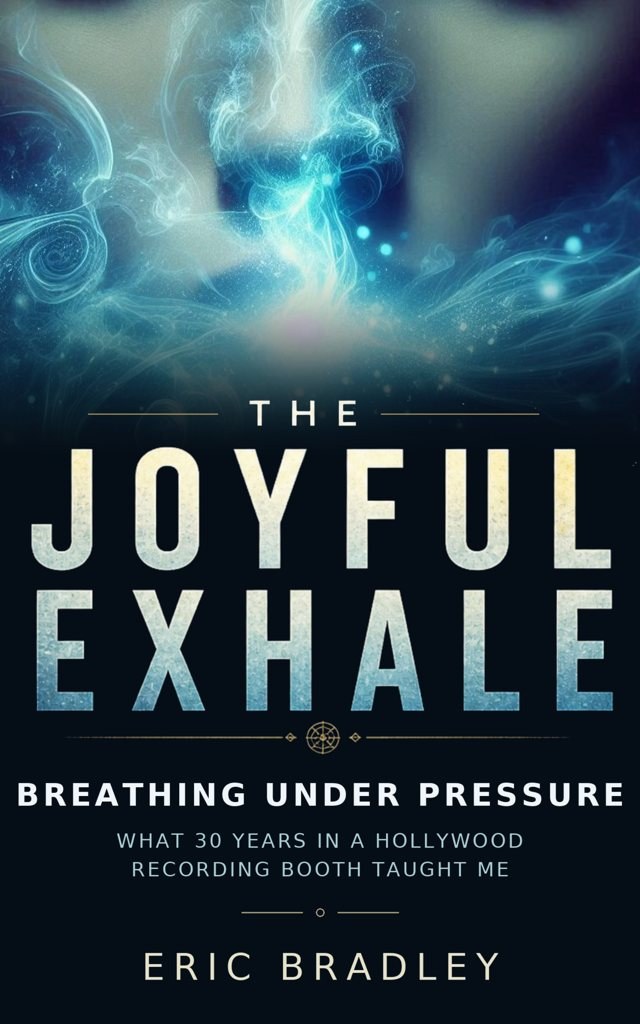
The Soundcheck is taught in chapter 3 of The Joyful Exhale: Breathing Under Pressure by Eric Bradley, with the full story behind it and its limits in context.
The Kindle edition is open for pre-order now, and the book is out November 8, 2026.
Cite this page: Eric Bradley, “The 30-second soundcheck: a body check before any pressure moment,” The Joyful Exhale, https://joyfulexhale.com/toolkit/the-soundcheck/